
Hello, and thank you for stopping by. I am Kaguya from Yushinkan Kyoto, home of Samurai Training with the Modern-day Musashi.
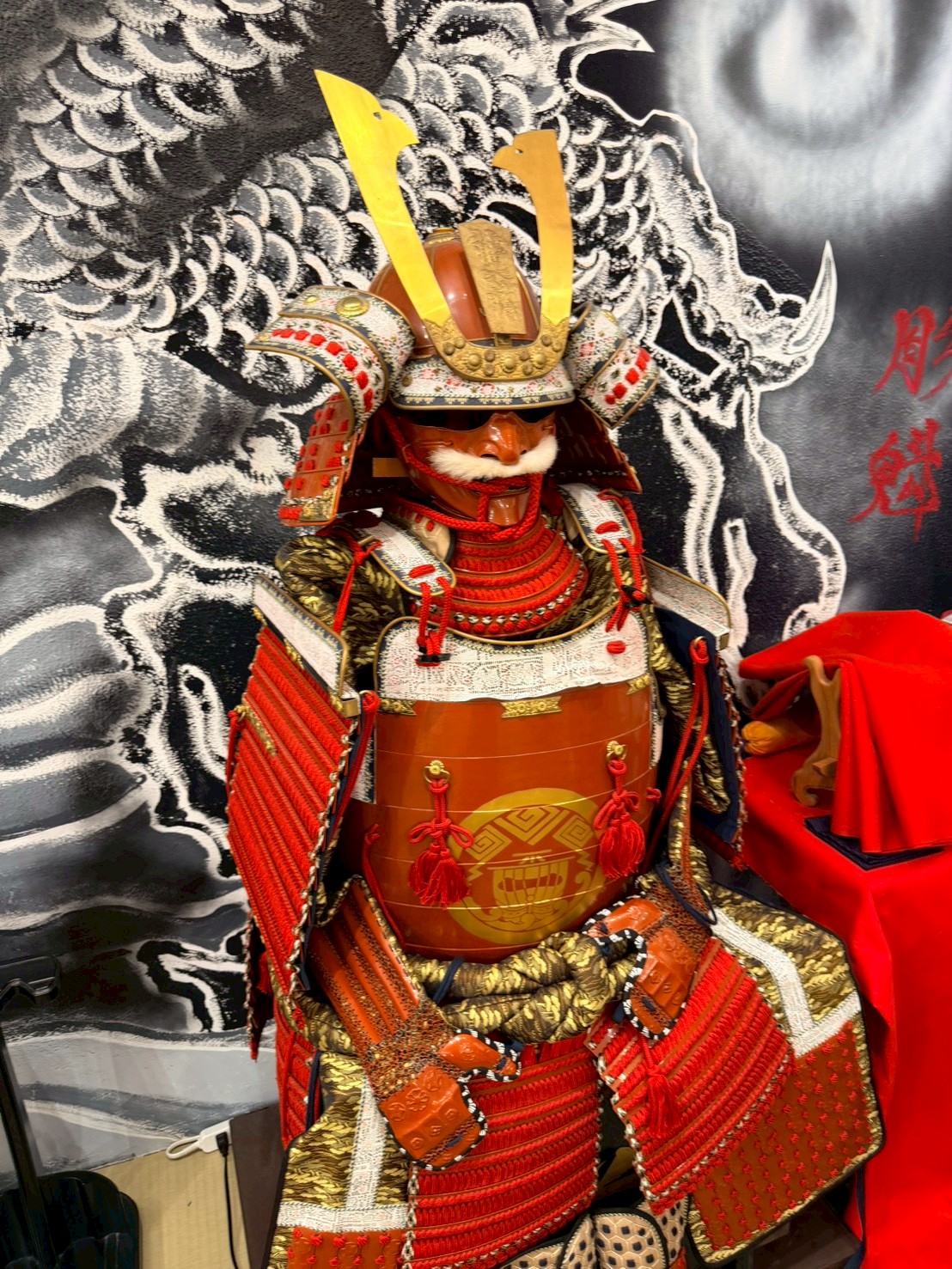
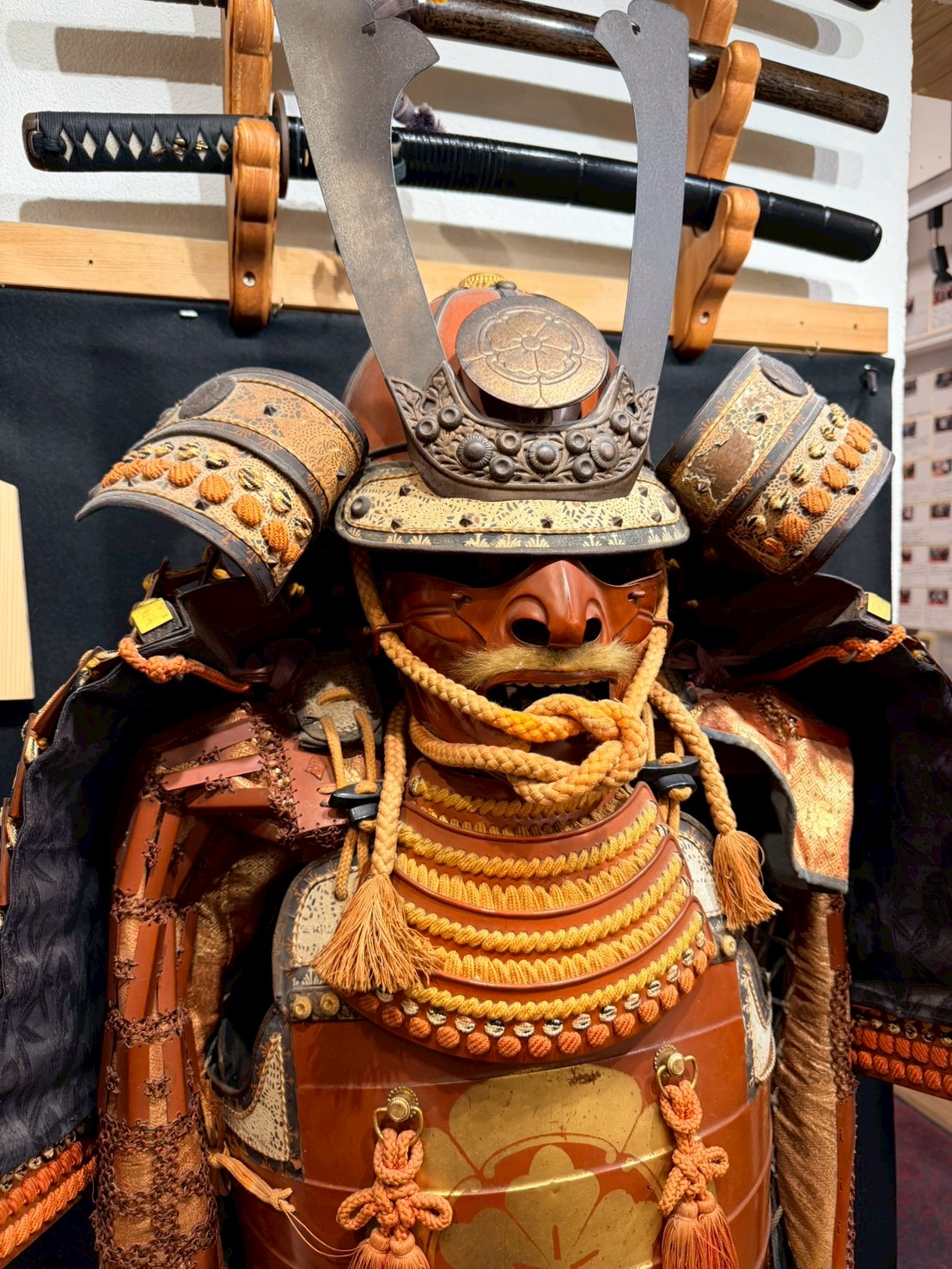
If you have ever looked at a suit of samurai armor and wondered what all those plates, cords, and fierce-looking masks are actually called, this guide is for you. Below, we walk through a real set of samurai armor piece by piece, using photos of the armor we keep right here in our dojo.
What Is Samurai Armor? (Yoroi and Gusoku)
Samurai armor, known in Japanese as yoroi or, for a complete suit, gusoku, was the battlefield equipment of Japan’s warrior class for roughly a thousand years. Unlike the solid steel plate of a European knight, samurai armor was built mostly from hundreds of small lacquered plates called scales, bound together with colorful silk or leather cords. This made it surprisingly flexible: a fully armored samurai could ride, draw a bow, and swing a sword far more freely than you might expect.
It was also deeply personal. The colors of the lacing, the family crest (mon), and the crest on the helmet all told the world exactly who was inside. A suit of armor was equal parts protection, identity, and art.
The Parts of Samurai Armor
A full suit is made up of many separate pieces, each protecting a different part of the body. Here are the ones you will see on almost every samurai armor.
Kabuto – The Helmet
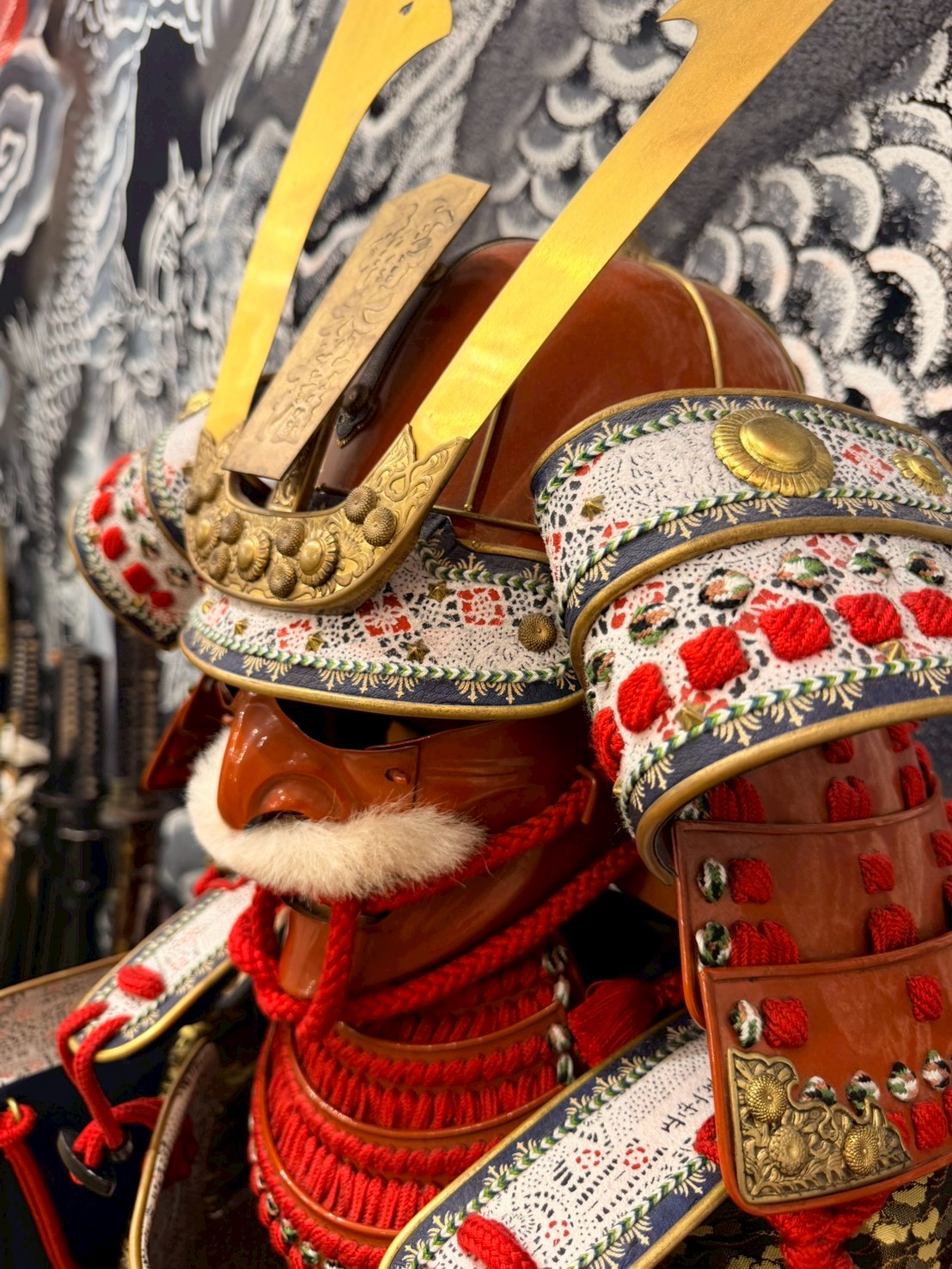
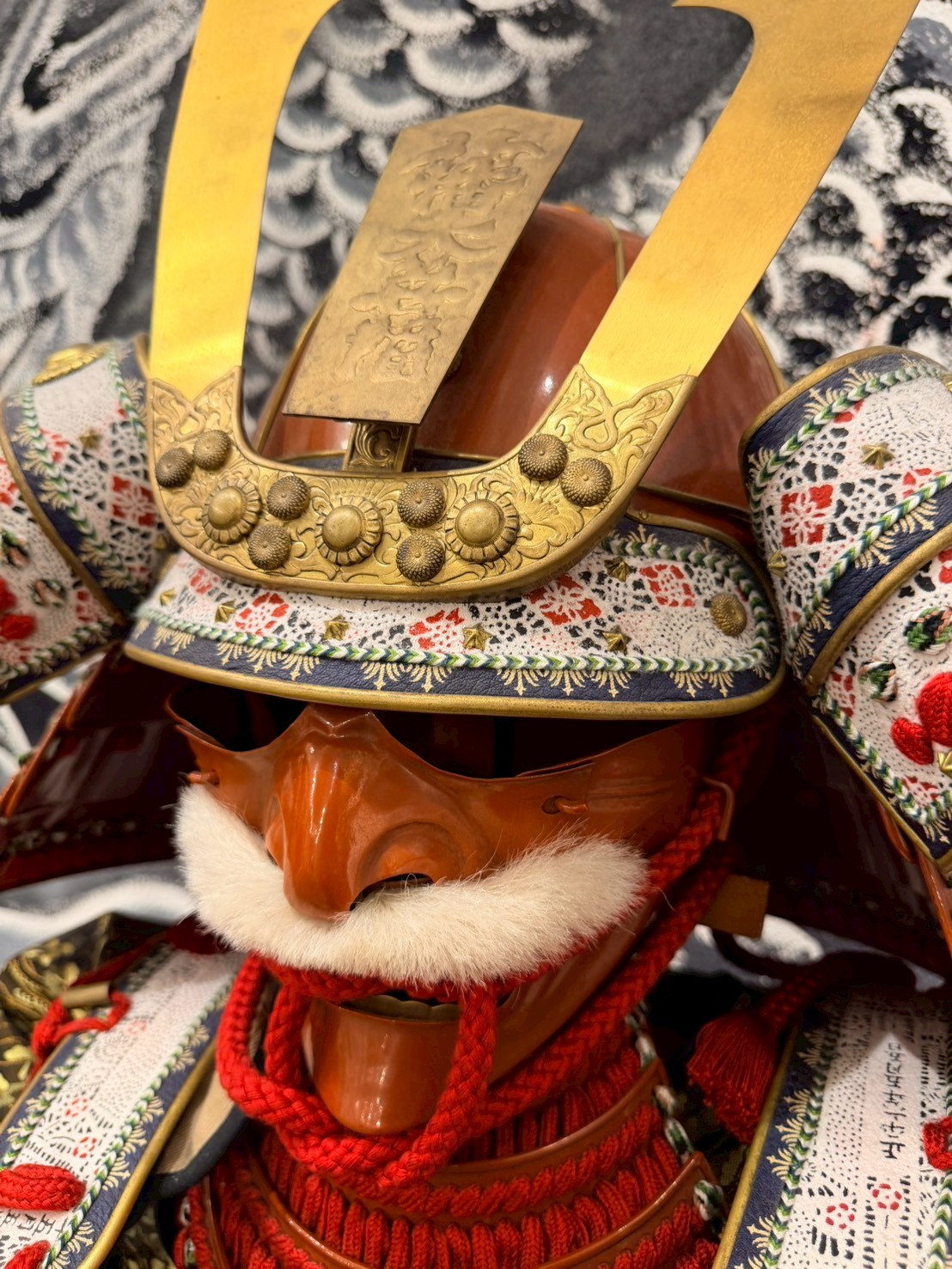
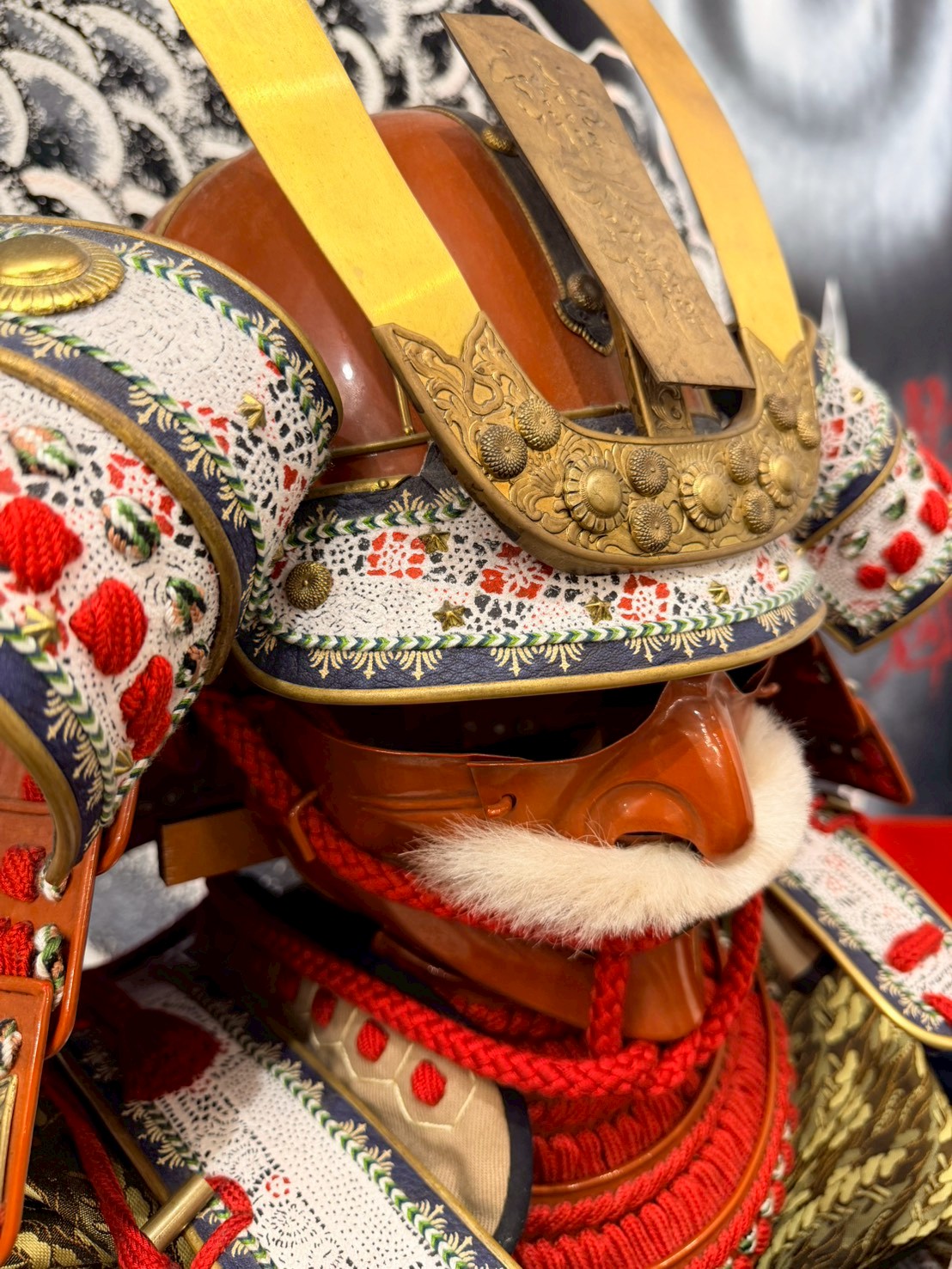
The kabuto is the helmet, usually formed from riveted iron plates that meet at the crown. A wide, flaring neck guard called the shikoro sweeps down to protect the back and sides of the neck. The kabuto was often the most expensive and most decorated piece of the entire suit.
Kuwagata and Maedate – The Helmet Crest
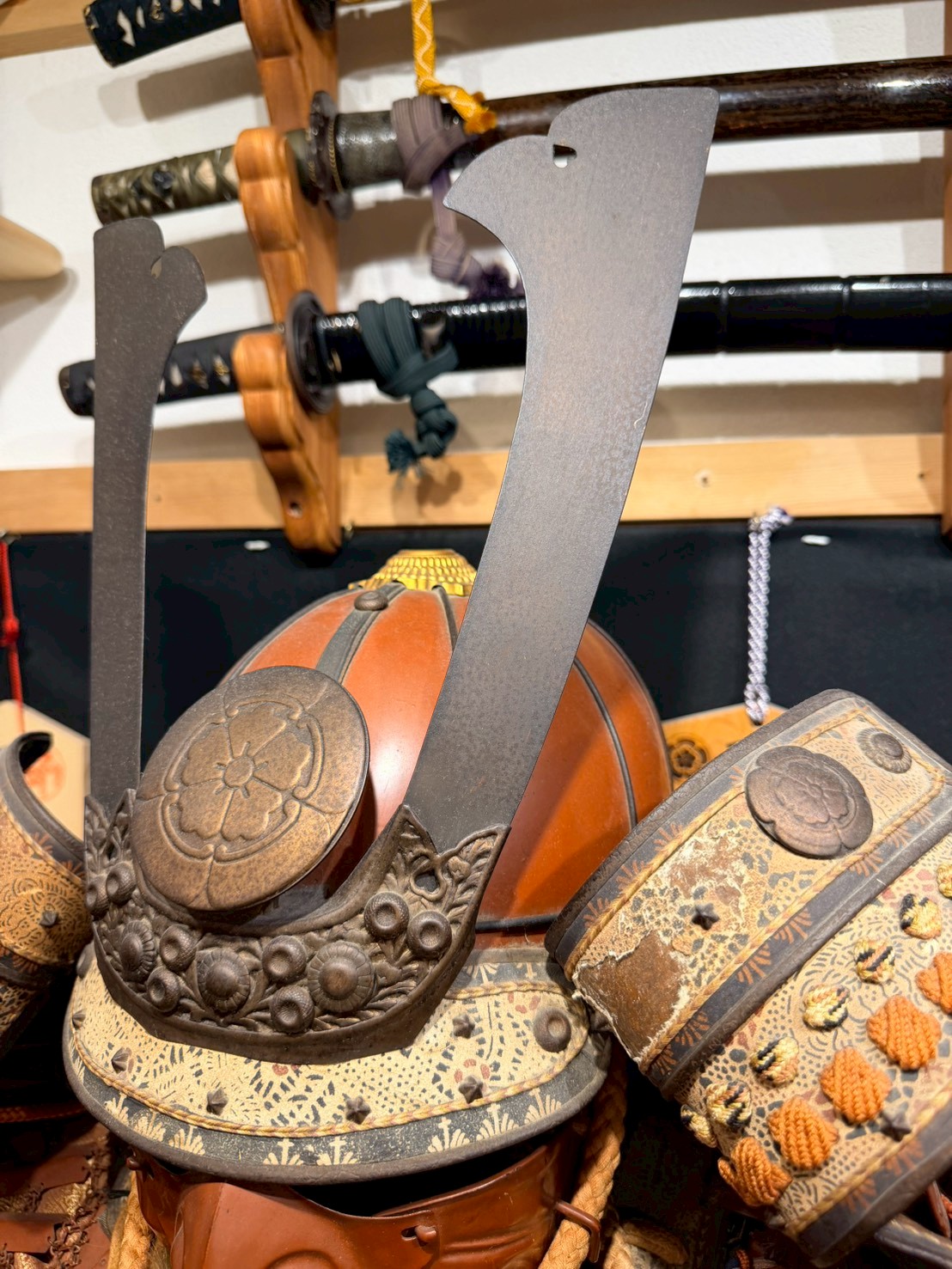
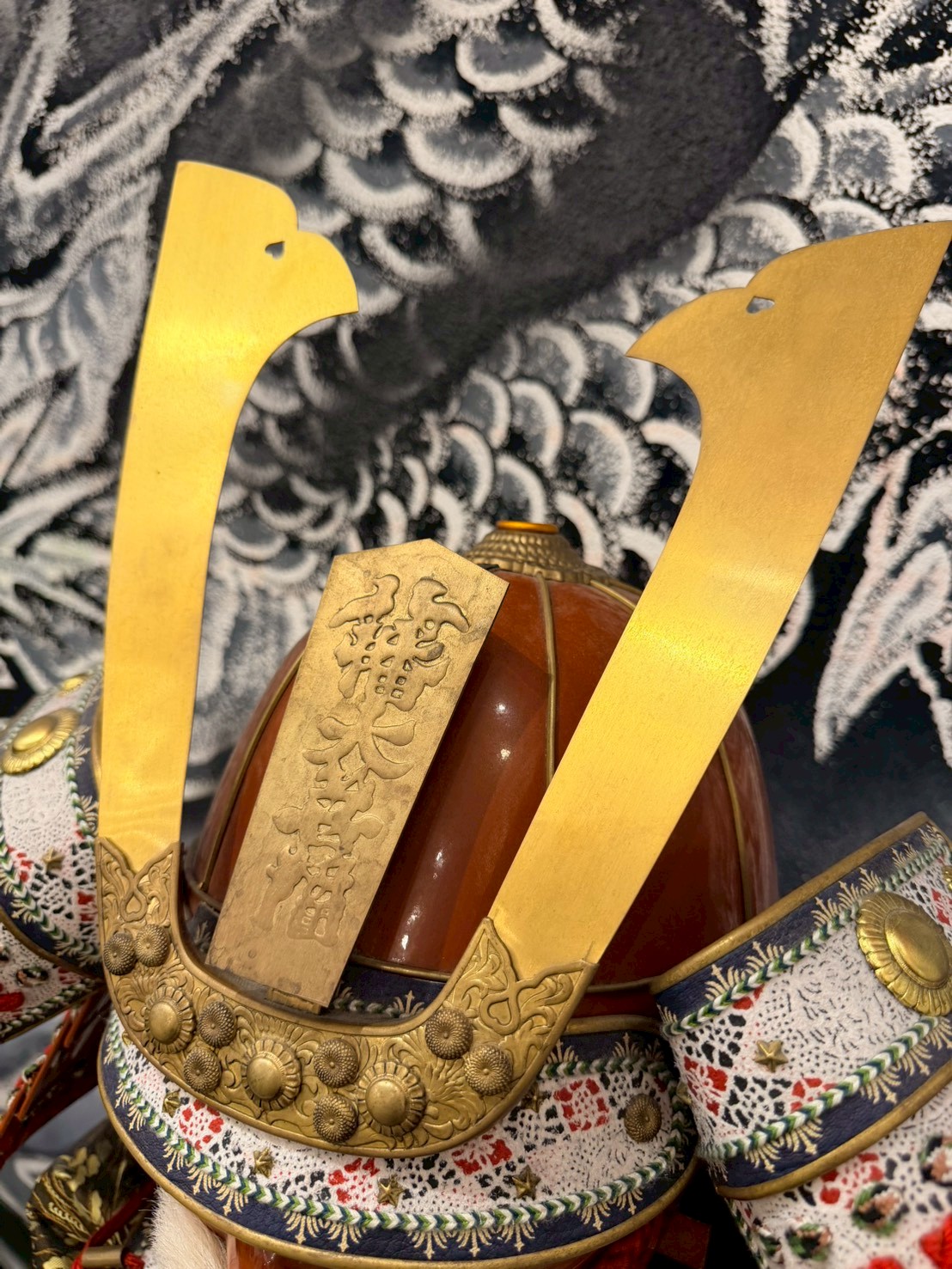
Those dramatic golden horns rising from the front of the helmet are the kuwagata, and the ornament between them is the maedate (front crest). These crests had no defensive purpose at all – they existed to make a commander instantly recognizable on a chaotic battlefield, and to project status and power.
Mempo – The Face Mask
The mempo is the iron face guard, and it is the piece that gives samurai armor so much of its intimidating character. Many were sculpted with fierce expressions, wrinkles, and even moustaches of real or horse hair to unnerve an opponent. A small hole under the chin let sweat drain out during battle.
Do – The Chest Armor
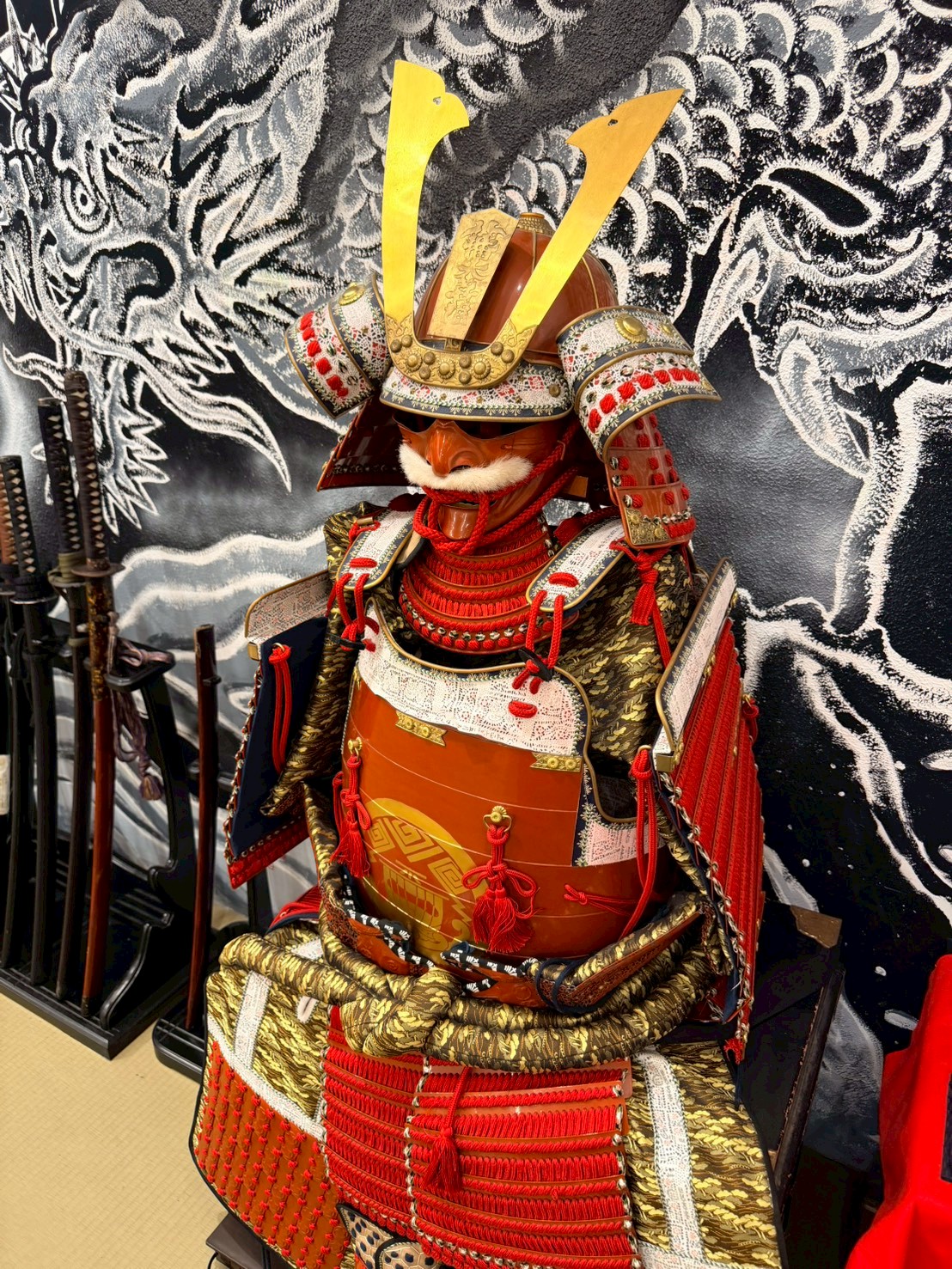
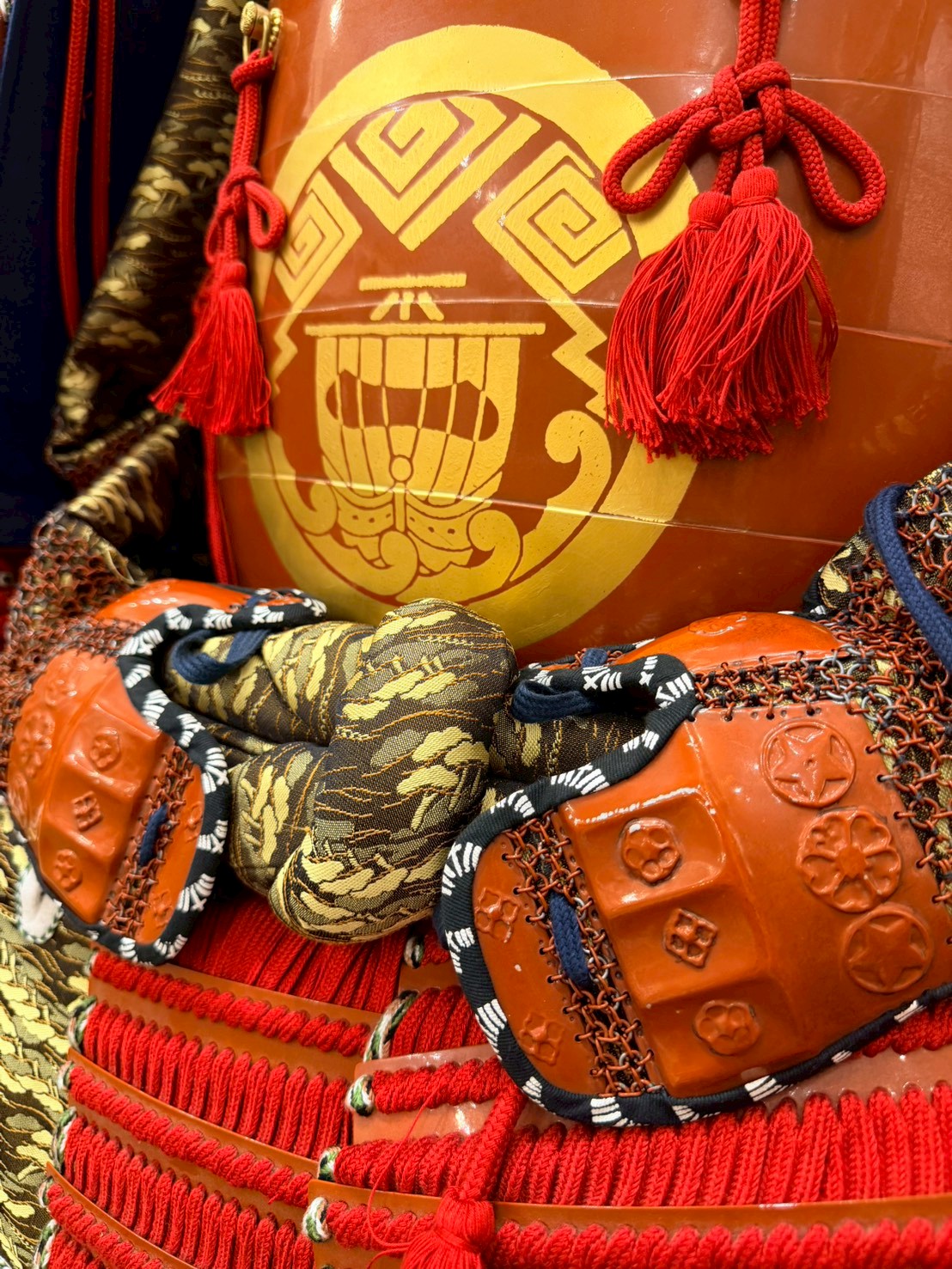
The do is the cuirass that protects the torso – the core of the whole suit. It could be built from rows of laced scales or from solid plates, and the front often displayed the wearer’s family crest. Everything else essentially hangs from or attaches around the do.
Kote – The Armored Sleeves
The kote are armored sleeves that guard the arms and the backs of the hands. They were typically made of cloth faced with chain mail and small iron plates, balancing protection with the freedom of movement a swordsman or archer needed.
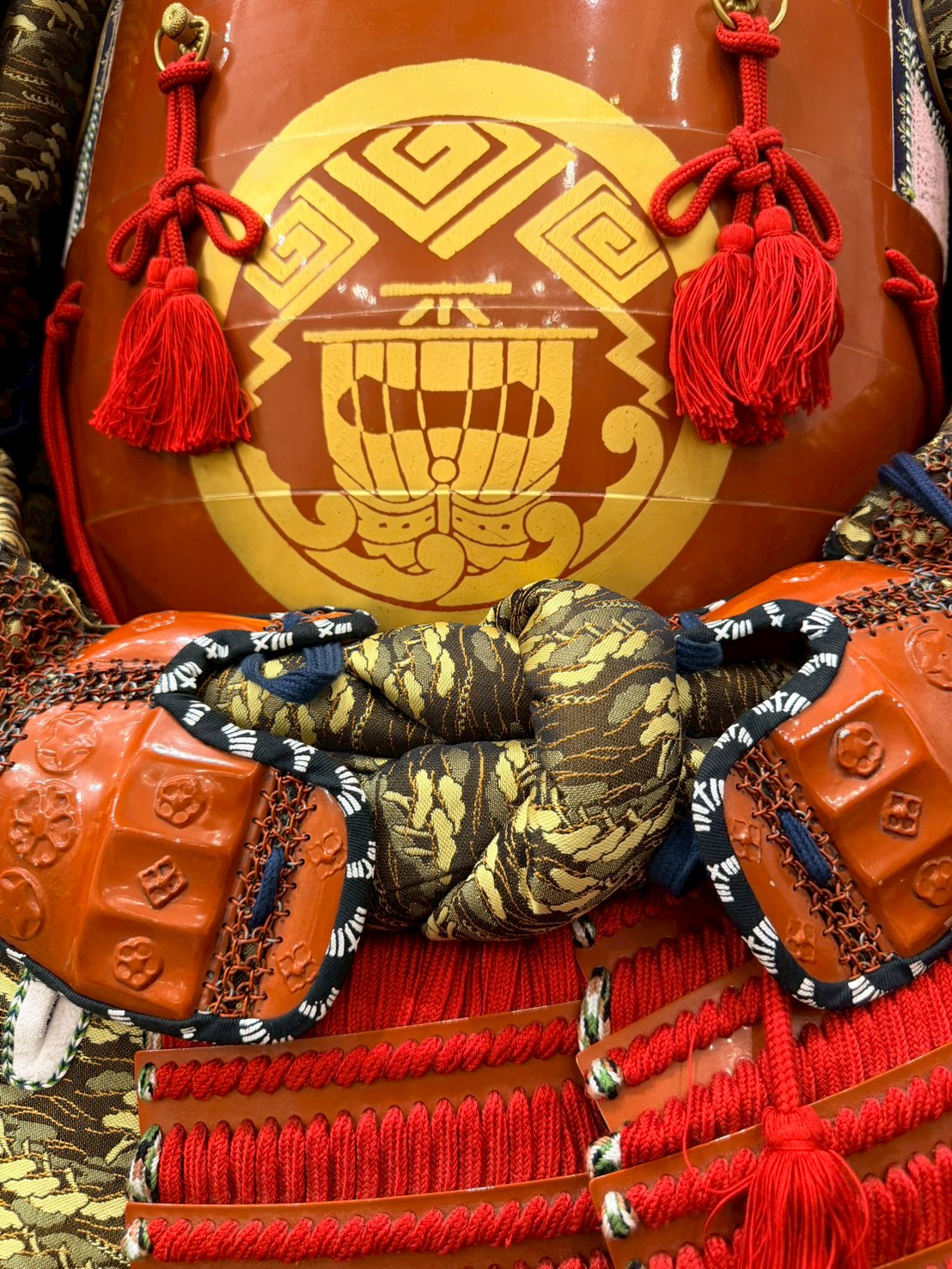
Sode – The Shoulder Guards
The large rectangular panels on the shoulders are the sode. On a mounted archer they acted almost like small shields, swinging back as the arms moved forward to keep the upper body covered.
Kusazuri – The Tassets / Skirt
Hanging from the bottom of the do is the kusazuri, a skirt of laced plates that protects the hips and upper thighs. It is split into several sections so the wearer can still walk, sit, and ride comfortably.
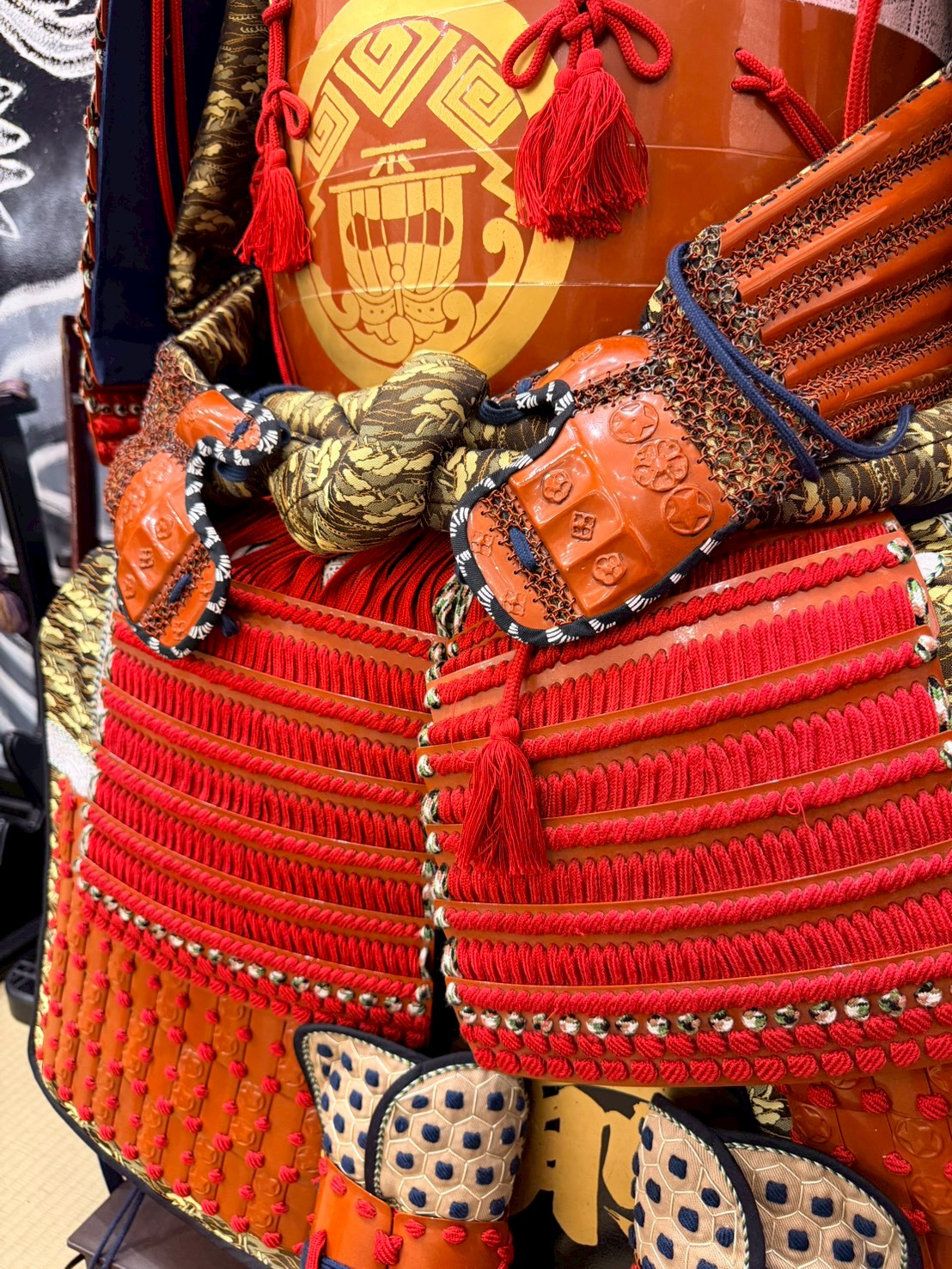
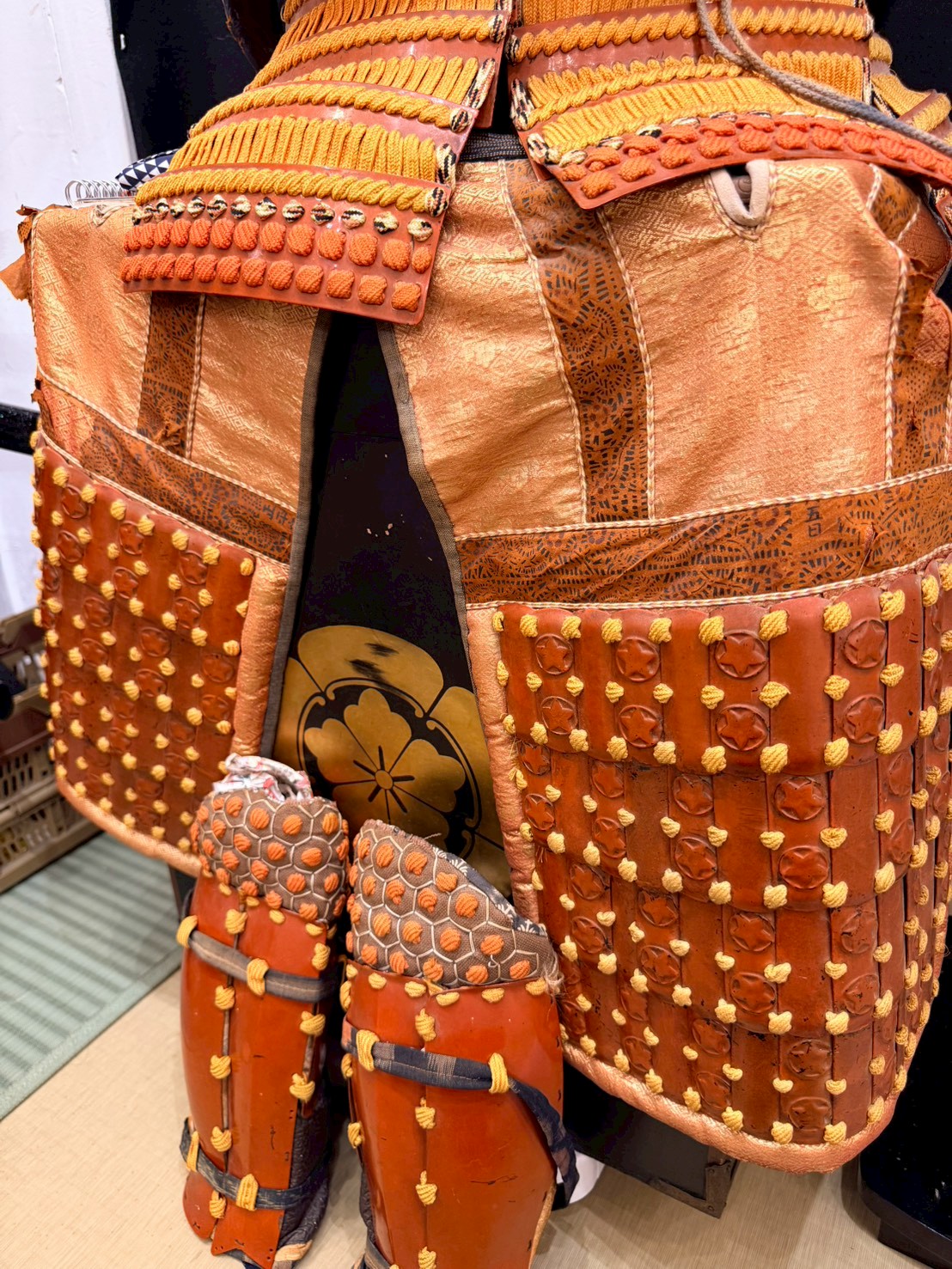
Haidate and Suneate – The Leg Armor
Below the skirt, the haidate are armored aprons that shield the thighs, while the suneate are shin guards strapped over the lower legs. Together they completed the suit, leaving very little of the body unprotected.
Types of Samurai Armor Through the Ages
Samurai armor did not stay the same for a thousand years – it evolved with how wars were fought. Three broad types stand out.
O-yoroi – The “great armor” of the Heian and Kamakura periods (roughly the 10th to 14th centuries). Boxy and heavy, it was designed for elite samurai fighting on horseback with bow and arrow. Its prestige made it the iconic armor of Japan’s early warrior aristocracy.
Do-maru and Haramaki – Lighter, body-hugging armor that wrapped closely around the torso. Originally worn by foot soldiers, it was so much more practical that even high-ranking samurai adopted it as warfare shifted toward fighting on foot.
Tosei-gusoku – Literally “modern equipment,” this is the armor of the Sengoku (Warring States) period in the 16th century. With the arrival of firearms, armorers turned to larger solid iron plates that could better resist bullets. These suits were stronger, easier to mass-produce, and are the look most people picture today.
What Did Samurai Wear Off the Battlefield?
Armor was only for war. Most of the time, a samurai’s outfit looked very different. Day to day, he wore a kimono paired with hakama – wide, pleated trousers that allowed easy movement. For formal occasions he added the kamishimo, a stiff winged vest (kataginu) worn over matching hakama.
One thing stayed constant in public, though: the two swords. The pairing of a long sword and a short sword, worn together at the waist, was called the daisho – and the right to wear it was the unmistakable mark of the samurai class.
The Yushinkan Armor Collection
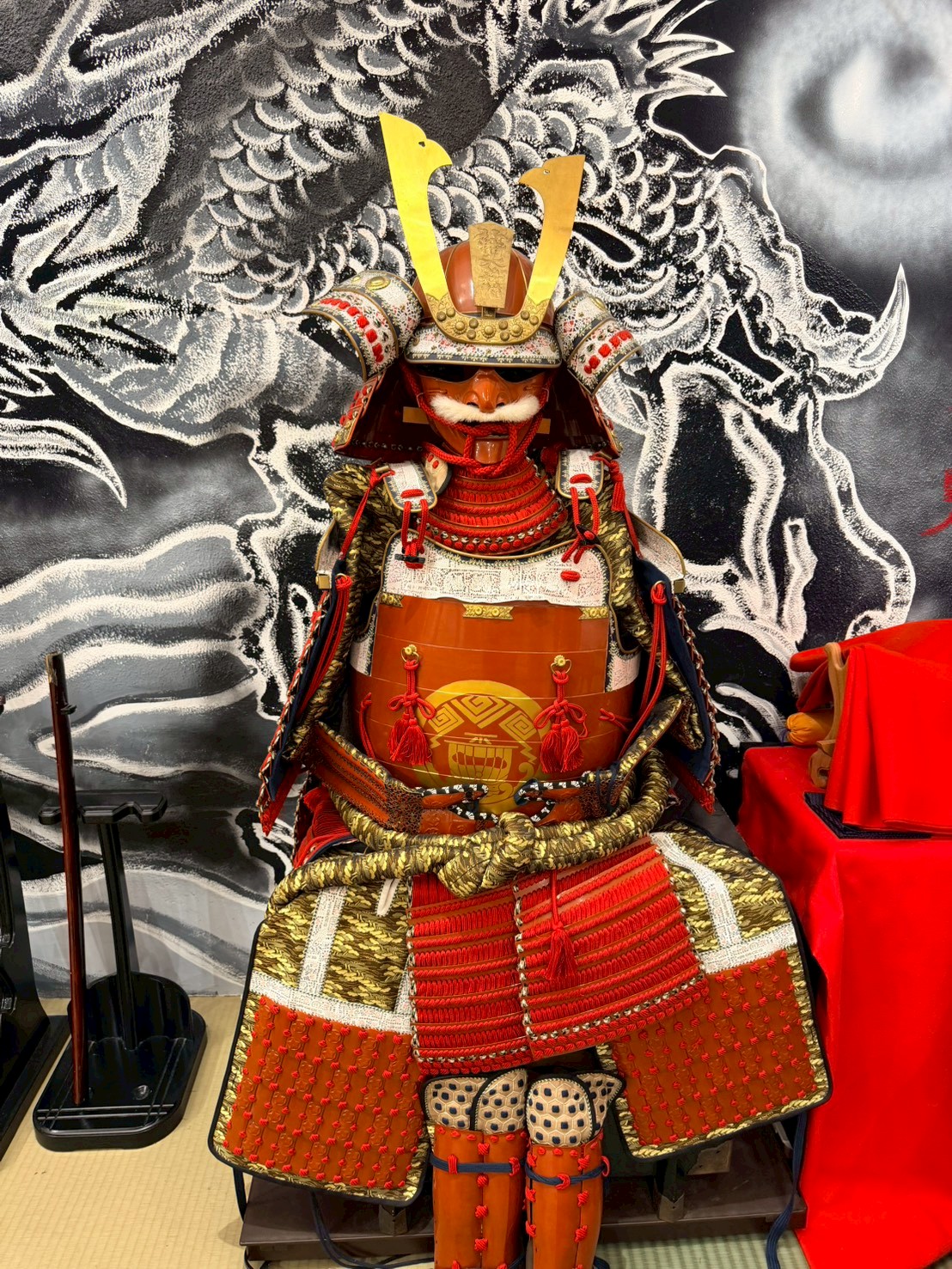
The photos in this guide come from the display armor we keep at our dojo in Kyoto. We have more than one suit, each with its own character – from a bright, red-and-gold set crowned with sweeping golden horns, to a darker, more understated suit with a rugged, battle-worn look. Standing in front of a full suit of samurai armor in person is a completely different experience from seeing it in a photo. The scale, the detail in the lacing, the sense of presence – it is something we love sharing with visitors.
Try On Samurai Armor in Kyoto
Reading about armor is one thing – wearing it is another. When you join our 90-minute Samurai Training experience at Yushinkan in Kyoto, you can add on a full suit of Japan-made samurai armor for an extra 10,000 yen per person, and take all the photos and videos you like. Our instructors help you into every piece, from the do to the kabuto, so you can feel its real weight and stand like a samurai.
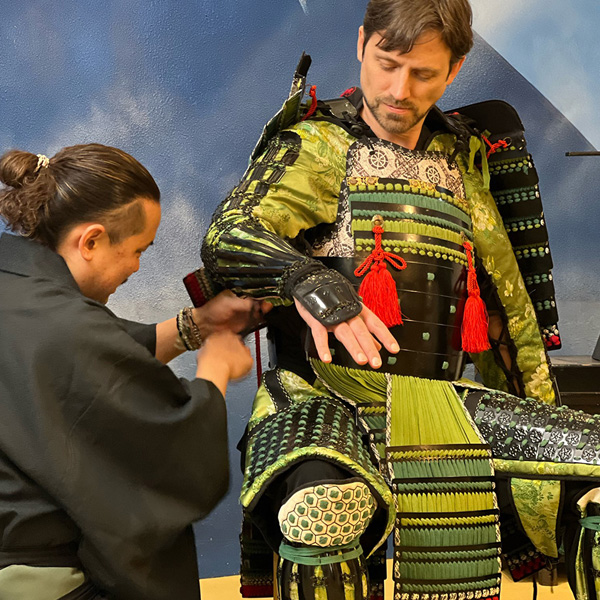
There is no need to arrange it ahead of time – just let us know on the training day that you would like to try the armor, and we will take care of the rest. It is one of the most popular ways to round off a session.
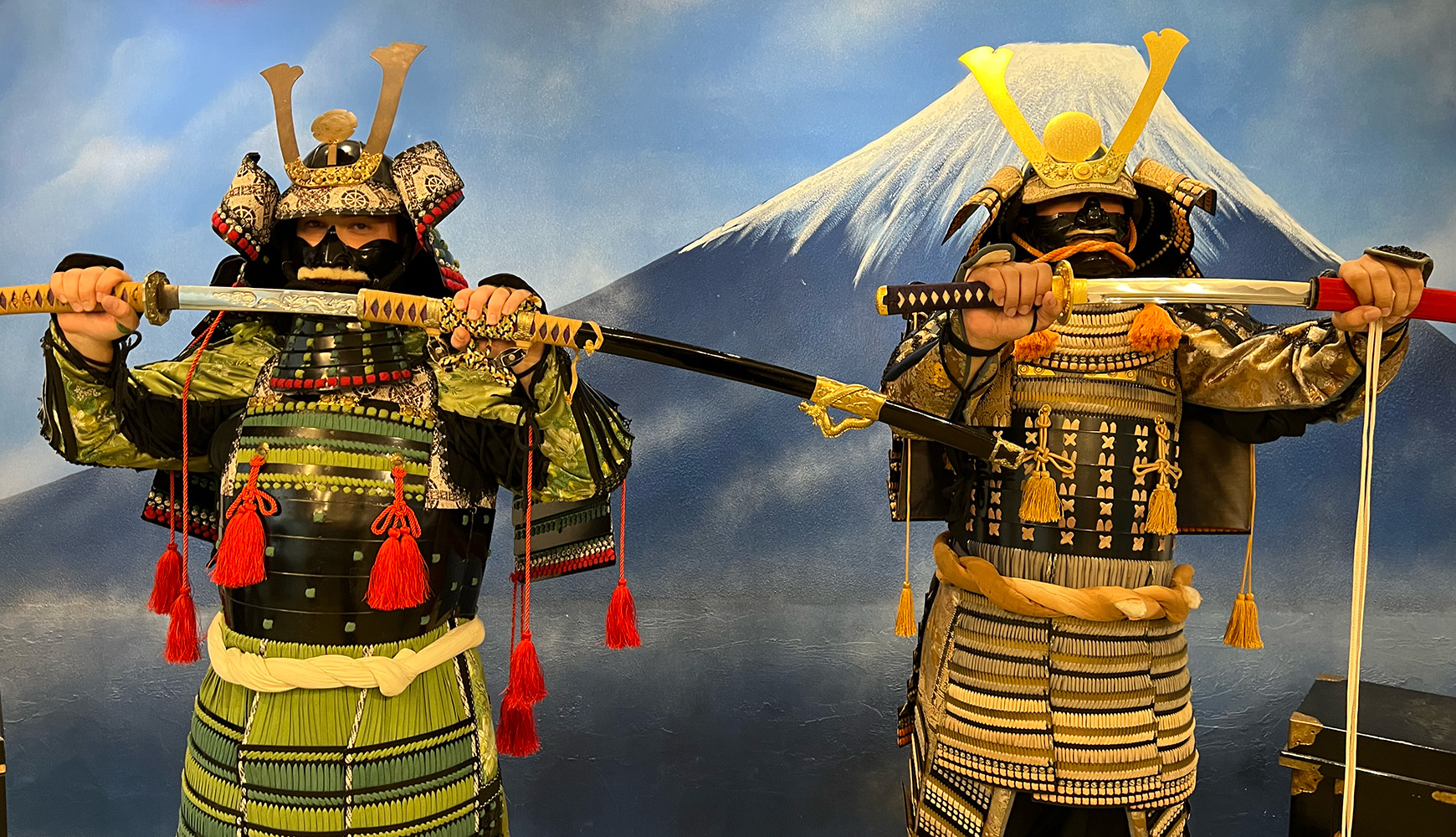
Ready to step into the world of the samurai? Learn more about our Samurai Training experience, and just ask us about the armor when you arrive – we would love to welcome you to the dojo.
See also: What a Real Samurai Cut Looks Like – watch our instructors demonstrate real cutting forms with a live blade.
Yushin-sensei also hand-selects authentic Japanese katana for collectors worldwide, with full export documentation. See our authentic katana for sale.
Frequently Asked Questions
What is samurai armor called in Japanese?
A complete suit is called gusoku, while the armor in general is yoroi.
How heavy was samurai armor?
A full suit typically weighed somewhere around 15 to 25 kg (roughly 30 to 55 lbs), depending on the type and period. Because the weight was distributed across the whole body, a trained samurai could still move, ride, and fight effectively.
What is the scariest-looking part of samurai armor?
That is usually the mempo, the iron face mask – often sculpted with a fierce expression and a moustache specifically to intimidate the enemy.
What did samurai wear when not in armor?
A kimono with hakama for everyday life, and a kamishimo for formal occasions – always paired in public with the two swords, the daisho.
Can I try on samurai armor in Kyoto?
Yes. Trying on a full suit of samurai armor is an optional add-on (10,000 yen per person) to our 90-minute Samurai Training experience – just ask on the training day, no advance booking needed. See the Samurai Training experience.
